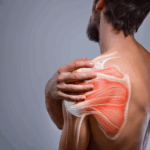

Read Been In A Car Accident? by Dr. Amit Patel DC to learn more about Ipswich Spine Clinic and our practice in Ipswich, Suffolk.
We look forward to serving you! Call – 01473 232 002.
It can happen in an instant! You were simply driving your car – possibly on auto-pilot – then out of nowhere another car swerves or an animal runs into the road and suddenly you slam on your brakes. Most often, we avoid the collision of another object, but in many cases, we don’t. Unfortunately, this sharp stop can be more harmful than you first suspect.
The “Sharp Stop” and Your Spine
Your spine houses your spinal cord. The first cervical vertebra, Atlas or C1, is the most freely movable vertebra in the spine and the one most likely to cause irritation or tension to the spinal cord. It pivots around the second cervical vertebra, the Axis or C2, connected only by ligaments and tendons, but has no disc, making it uniquely different from the rest of the spine. This is what allows the majority of spinal rotation to occur, but at the price of instability. Any kind of head or neck trauma can cause a misalignment in your spine. Now add a sharp stop – especially one in an automobile or mechanical vehicle – which adds more speed and force.
Today, intensive research studies have demonstrated that any collision greater than 11 mph is serious because it can cause whiplash and misalignments to your cervical spine, as well as damage to underlying muscles, ligaments, and surrounding tissue, leading to further problems with your nervous system. C1 and C2 are most vulnerable and if left undetected and uncorrected, can lead to nerve interference, which results in poor function inside the body and a deterioration in your health.
An Interesting Study
A study published on August 2, 2004, in the peer-reviewed Journal of Vertebral Subluxation showed that the onset of both Parkinson’s Disease and Multiple Sclerosis was statistically related to trauma to the head and/or neck. The study also showed that a high percentage of the patients in this retrospective study benefited significantly from chiropractic and soft tissue rehabilitation care.
This study reviewed the cases of 81 patients with either Parkinson’s Disease or Multiple Sclerosis. Of the 81 patients, 78 recalled that they had experienced at least one head or neck trauma prior to the onset of their disease. Of the patients in this study, 39 reported that they were involved in auto accidents, 29 noted that they had been involved in some sort of sporting accident, such as skiing, horseback riding, cycling, and football, and 16 were involved in falls, such as on icy pavements or down stairs. The length of time between the traumatic event and the onset of their disease varied from two months to 30 years.
All 81 patients received specific chiropractic care for correction of spinal misalignments. The results were astounding!
Of the 44 Multiple Sclerosis cases, 40 (91%) reported improvement from the chiropractic care. Of these, 28 showed “substantial” improvement; 8 showed “moderate” improvement; and 5 showed “minor” improvement. No further progression of Multiple Sclerosis was noted in the improved cases during the care period, which ranged from one to five years depending on the patient. Only four cases reported “no change” in their condition.
Of the 37 patients with Parkinson’s Disease, 34 (92%) reported improvement. Of these patients, 16 showed “substantial” improvement; 8 showed “moderate” improvement; and 11 showed “minor” improvement. As with the MS patients, no further progression of Parkinson’s Disease was noted in the improved cases during the care period, which ranged from one to five years depending on the patient. Only three cases reported “no change” in their condition.
The conclusions published in the Journal showed that a causal link exists between trauma-induced upper cervical (neck) injury and disease onset for both Multiple Sclerosis and Parkinson’s Disease. Correcting the injury to the upper cervical spine (C1 & C2) with chiropractic and soft tissue rehabilitation seemed to arrest and reverse the progression of both of these diseases in the patients in this study. These results offer hope to patients who suffer from these debilitating diseases.
Why Wait? What is Stopping You?
There are so many variables involved in how an accident occurs, as there are with the individual victim, so it is impossible to predict an exact pattern of symptoms. It may also be the case that injuries are felt within an hour of the accident, or not until weeks or months later. Generally, though, there is an array of conditions that is very often seen after whiplash: neck pain, headaches, TMJ problems, brain injury, dizziness, and low back pain.
Whiplash injuries should be treated by specially trained professionals who know and understand this condition early before disease processes can begin. The most effective treatment combines chiropractic care with rehabilitation of the soft tissues, and a self-care routine.
So why wait until you become sick? Our practice staff, which can include chiropractors, physical therapists, registered nurses, and massage therapists, has been created for you to teach you about how to get well and stay well for life. We recognize that true health comes from effort, and when we start taking responsibility for our choices, we can return to the best of health and stay there!
For Your Health,
Dr. Amit Patel DC
An Optimal Spine Equals Optimal Health
Ipswich Spine Clinic
Neale Chambers, 6-8 Neale Street,
Ipswich, Suffolk, IP1 3JB
Phone: 01473 232 002